Why carpenter ants point to a moisture problem
Carpenter ants prefer wood that is wet or decaying, because it is easier to excavate and it stays humid enough for the colony. A nest is therefore a record of where water has been getting in, and that record is the most useful thing the inspection can give you.
A dry, sound beam is not an attractive home for a colony. A joist that has been wet at one end, a sill that sits in a splash zone and a window frame that never fully dried after a leak are all candidates. The technician records the wood's condition, because the ants have already done the moisture survey for you.
Correcting the water is what keeps a repaired nest from being reoccupied. Ants will return to damp wood as soon as the treatment fades, so the gutter, the grading and the drainage get the same attention as the colony itself. Without that step, the work is a temporary removal rather than a repair.
Reading the frass and the galleries
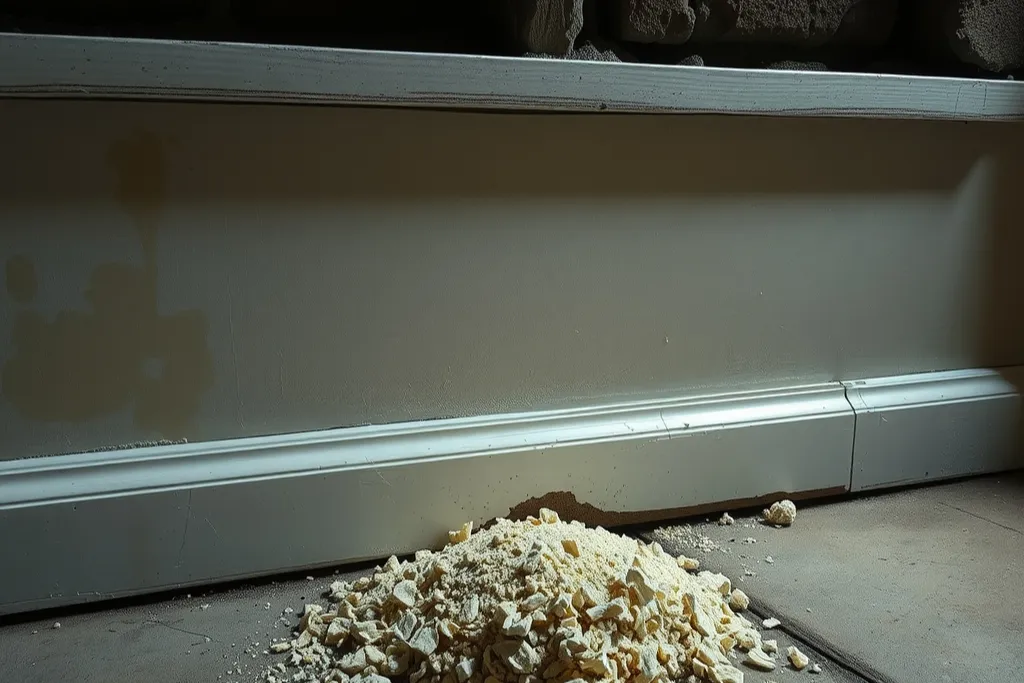
Frass is the sawdust a carpenter ant pushes out of its galleries, and it is one of the most reliable signs in the building. Its texture, color and location give the technician a map of the colony before any wood is opened.
Frass from carpenter ants is coarse and fibrous, unlike the fine dust left by drywall or wood-boring beetles. It collects below the entrance to a gallery, often on a sill, a windowsill or the floor beneath a joist. Fresh frass is light in color and dry, while older frass darkens and clumps.
Galleries are the tunnels the colony excavates, and they can run along the grain of a beam for a long distance. A gallery that is hollow or papery to the touch is a sign of long occupation. The technician does not open walls without good cause, but where the evidence points to a gallery, the inspection notes the likely route.
Carpenter ants compared with other ants
Carpenter ants are often confused with other large ants, and the difference matters because the treatment and the repair are different. The inspection confirms the species before any work begins, using the body shape, the color and the nest location.
Carpenter ants are large, usually black or black and red, and they have a single node between the thorax and the abdomen that makes the waist look pinched. Many other ants in the house are smaller and feed on sugar or grease rather than building galleries in timber, and those are handled separately on the ant control page.
A correct identification also tells the owner how serious the situation is. A few carpenter ants walking along a wall may be scouts from a colony outside, while a steady stream of workers carrying frass into a gap points to a nest in the structure. The report states which one the evidence supports.